Tyvek® outperforms competitive material in low-temperature sterilization
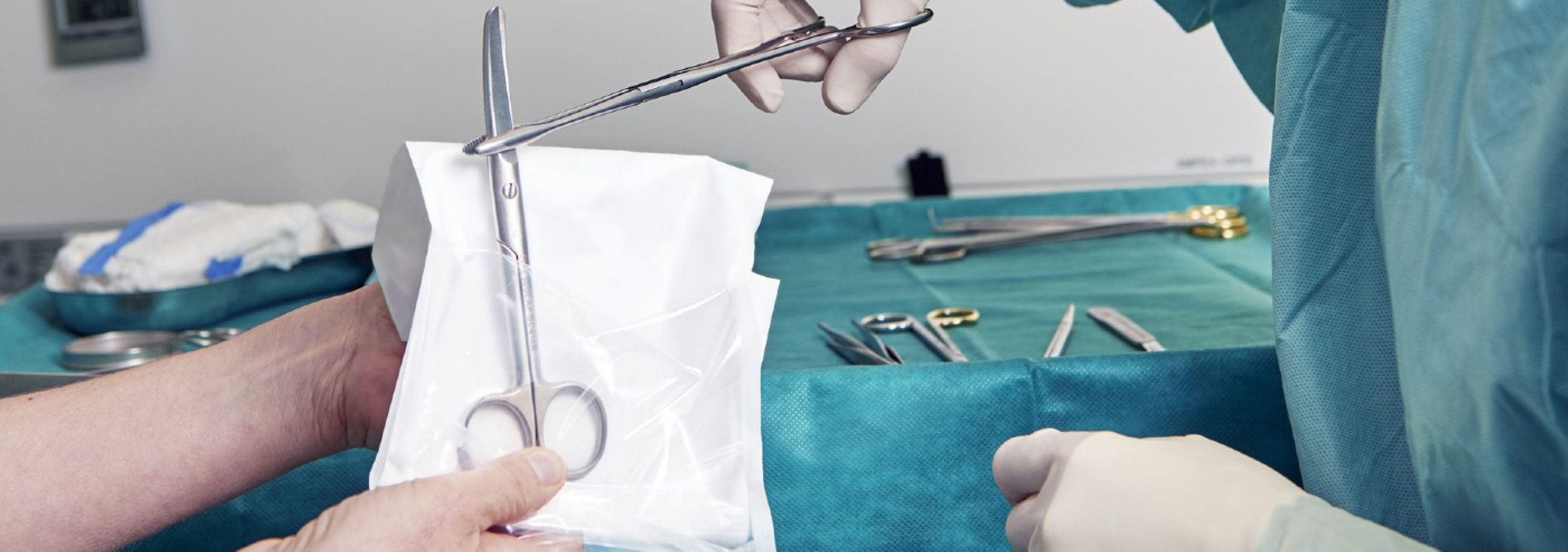
Critical temperature-sensitive medical devices that require the use of low-temperature sterilization processes must have a trusted packaging solution that does not compromise microbial barrier performance nor mechanical properties.
Currently, hospitals and healthcare providers can choose from several different porous packaging materials for the sterilization pouches and reels they use to sterilize medical devices that are heat- and moisture-sensitive. However, it is important to note that performance of these materials varies significantly.
To illustrate this point, tests of the most important properties defining best-in-class performance before and after sterilization were conducted on DuPont™ Tyvek® 1073B and a competitive spunbonded polypropylene (PP) based material currently promoted for in-hospital use. Both materials were exposed to standard cycles of vaporized hydrogen peroxide (H2O2).
Microbial barrier performance
Both Tyvek® 1073B and the competitive spunbonded PP material were tested according to ASTM F1608, an industry-recognized standard used to measure the microbial barrier performance of porous healthcare packaging materials. The higher the log reduction value (LRV), the better the microbial barrier performance.
As shown in Figure 1, the difference in microbial barrier performance of Tyvek® 1073B and the competitive spunbonded PP material is over 3 units on a logarithmic scale both before and after H2O2 sterilization. This means that, on average, Tyvek® retains over 1,000 times more microorganisms compared to the competitive spunbonded PP material.
Microbial barrier (ASTM F1608)
While this clearly shows the superior microbial barrier performance of Tyvek® 1073B, it also raises important concerns about the performance of the competitive spunbonded PP material, which has an LRV of about 1 (corresponding to only 90% retention of microorganisms). This is also significantly below the microbial performance of current sterilization wraps. To support the continuous fight to minimize the risks of nosocomial infections of patients, it is essential that porous material provides state-of-the-art microbial performance.
Liquid transfer resistance
To measure the risk of liquid transfer to the medical device before and after H₂O₂ sterilization, the hydrostatic head of both Tyvek® 1073B and the competitive spunbonded PP material were tested according to AATCC TM 127. As shown in Figure 2, Tyvek® performs about 2.5 times better than the competitive spunbonded PP material before sterilization and about 2 times better after sterilization.
Liquid transfer resistance (AATCC TM 127)
The decrease in hydrostatic head after sterilization for both of these packaging materials is due to the fact that sterilization modalities using hydrogen peroxide (H2O2) gas technology may increase the surface energy of the packaging materials, resulting in a lower resistance to liquid transfer.
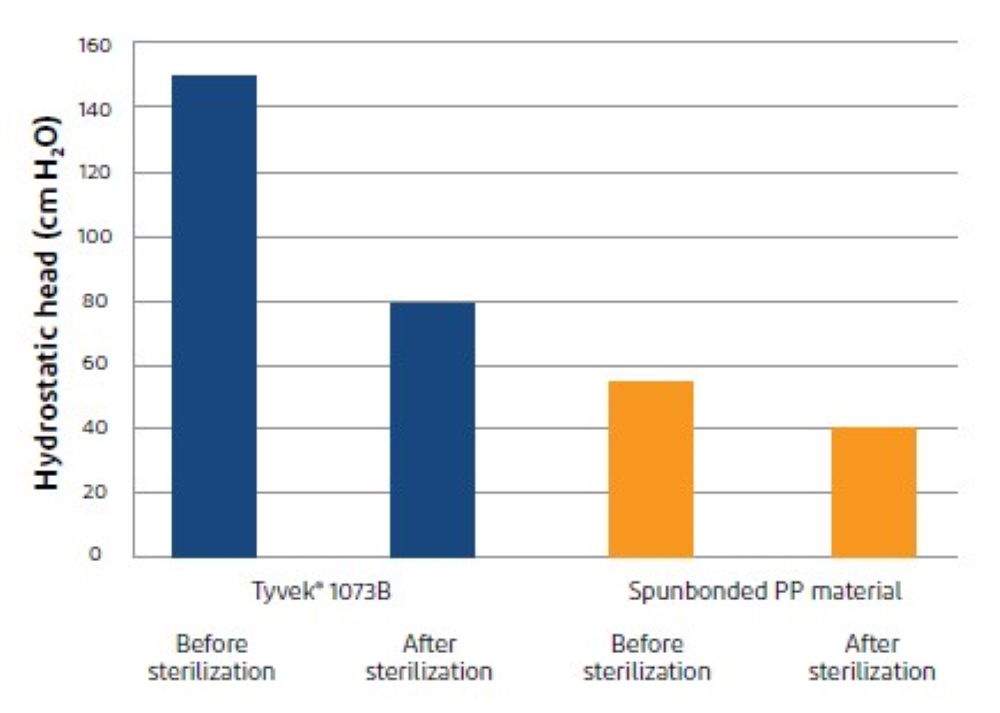
Figure 2. Comparison of the liquid transfer resistance of Tyvek® 1073B vs. a competitive spunbonded PP material, both before and after H2O2 sterilization.
Sterile integrity
It is essential for a sterile barrier system (SBS) to meet the barrier requirements before, during, and after the sterilization process, including handling and storage. Sterile barrier properties must not be compromised during the lifecycle of packaging—whether it has a short or long shelf life.
That’s why it is important to select a robust packaging material that will maintain the integrity of the SBS, especially during handling and storage. Two tests commonly used to determine the robustness of sterile packaging materials are Mullen burst and puncture resistance.
Mullen burst performance
Mullen burst measures the ability of a material to resist forces applied uniformly throughout the material (e.g., where pressure changes take place or where a force is applied over a relatively large area).
The Mullen burst performance of both Tyvek® 1073B and the competitive spunbonded PP material were tested according to ISO 2758.
As shown in Figure 3, Tyvek® 1073B has superior burst strength, measuring nearly 2 times better than the competitive spunbonded PP material.
Bursting strength (ISO 2758)
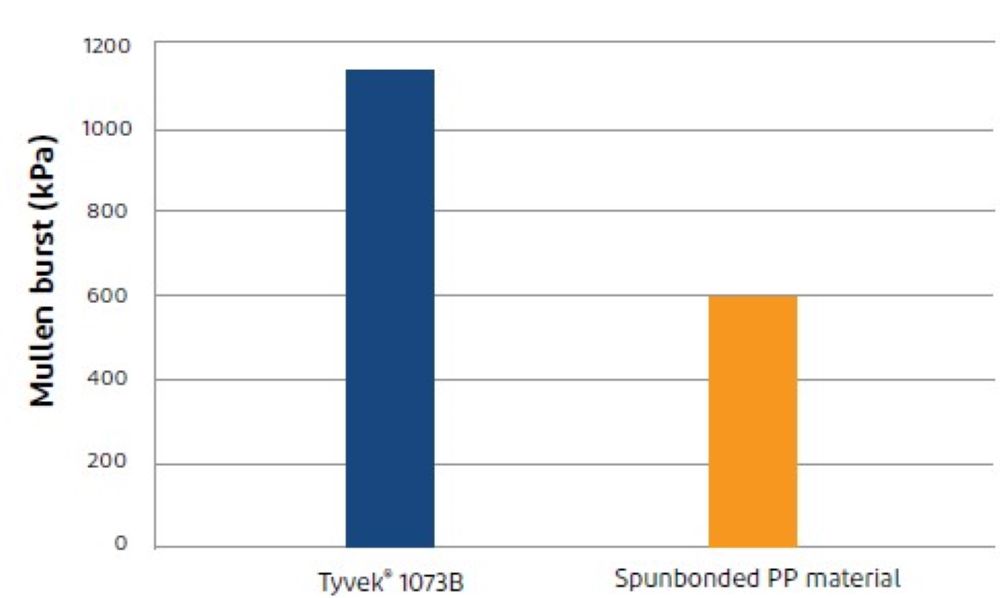
Figure 3. Comparison of the burst strength of Tyvek® 1073B vs. a competitive spunbonded PP material.
Puncture resistance
To maintain the sterile integrity of a packaged medical device, the sterile packaging material must help protect against product breakthrough inside—even from the irregular or sharp edges of many surgical devices—and from rough handling outside.
The puncture resistance of both Tyvek® 1073B and the competitive spunbonded PP material were tested according to ASTM F1306. As shown in Figure 4, Tyvek® 1073B offers superior puncture resistance.
Puncture resistance (ASTM F1306)
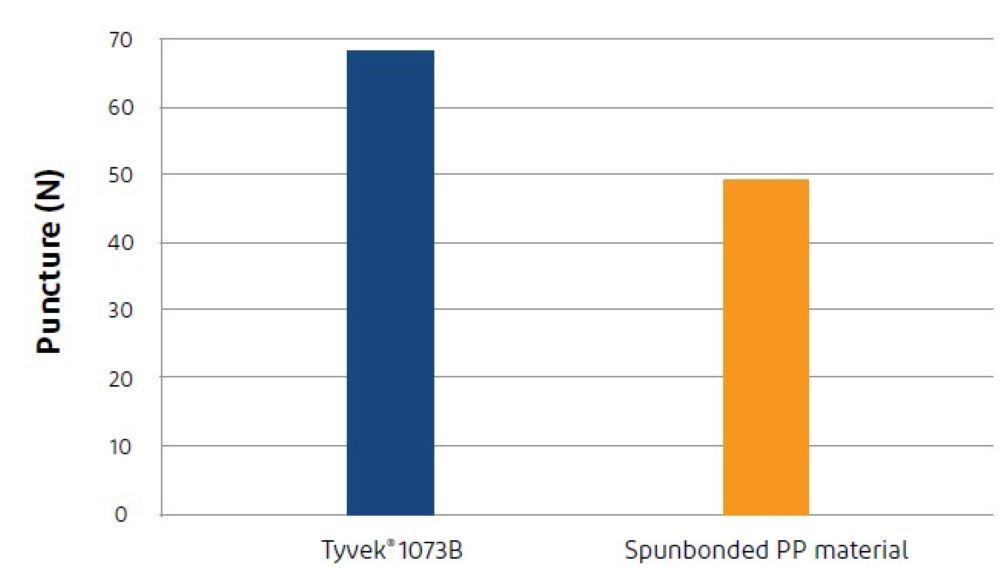
Figure 4. Comparison of the puncture resistance of Tyvek® 1073B vs. a competitive spunbonded PP material.
Tyvek®—best‑in‑class for low‑temperature sterilization
Hospitals and healthcare providers can feel confident when choosing Tyvek® 1073B for sterilizing heat‑ and moisture‑sensitive medical devices with H2O2 sterilization. That’s because, in tests of the most important properties defining best‑in‑class performance—microbial barrier, liquid transfer resistance, burst strength, and puncture resistance—Tyvek® 1073B consistently outperforms other porous packaging materials, including a competitive spunbonded PP material currently promoted for in‑hospital use. Simply stated, Tyvek® 1073B provides superior performance before and after H2O2 sterilization.
Tyvek®—best‑in‑class for low‑temperature sterilization
Tyvek® is a lightweight mono-material structure made of high-density polyethylene (HDPE). It has been externally certified as 100% recyclable, making it an attractive choice for sustainable packaging. With its superior mechanical properties coupled with market-leading microbial barrier performance, Tyvek® helps reduce environmental impact without compromising patient safety.
Tyvek® is made of HDPE, and products made of 100% Tyvek® material can be recycled at facilities that recycle flexible HDPE materials. Please check recycling facilities in your area to ensure they can recycle Tyvek®.
This information is based upon technical data that DuPont believes to be reliable. It is subject to revision as additional knowledge and experience become available. DuPont makes no guarantee of results and assumes no obligation or liability in connection with this information. It is intended for use by persons having technical skill for evaluation under their specific end‑use conditions at their own discretion and risk. Since conditions of use are outside our control, DUPONT MAKES NO WARRANTIES, EXPRESSED OR IMPLIED, INCLUDING WITHOUT LIMITATIONS, NO WARRANTIES OF MERCHANTABILITY OR FITNESS FOR A PARTICULAR USE AND ASSUMES NO LIABILITY IN CONNECTION WITH ANY USE OF THIS INFORMATION. This information is not intended as a license to operate under or a recommendation to infringe any patent or technical information of DuPont or others covering any material or its use.
© 2022 DuPont. All rights reserved. DuPont™, the DuPont Oval Logo, and all trademarks and service marks denoted with ™, SM, or ® are owned by affiliates of DuPont de Nemours, Inc. unless otherwise noted. DSF22_2210‑0802 (11/22)