

Tyvek / DuPont™ Tyvek® 500

TY198S WH

DuPont™ Tyvek® 500

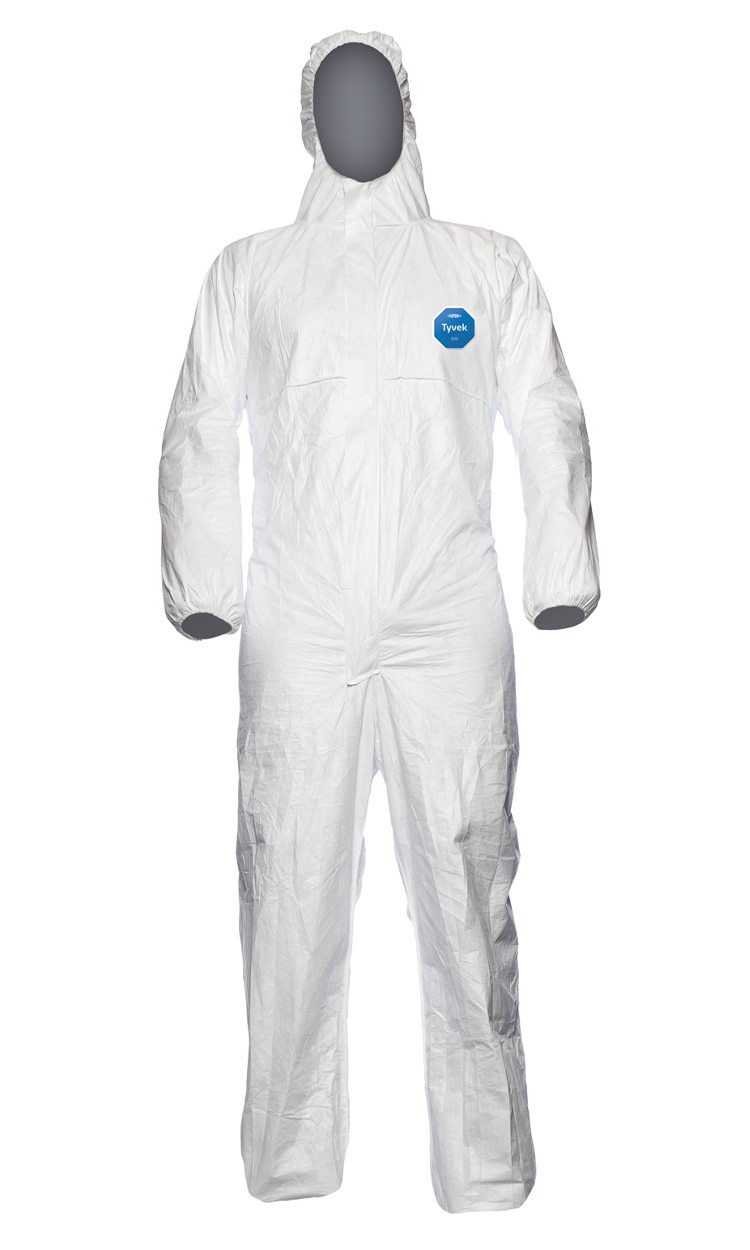
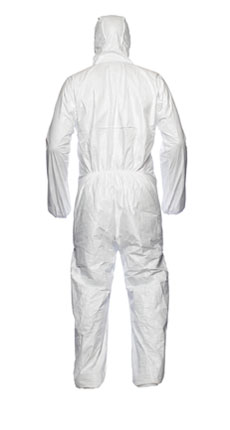
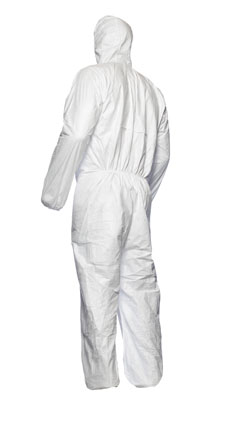
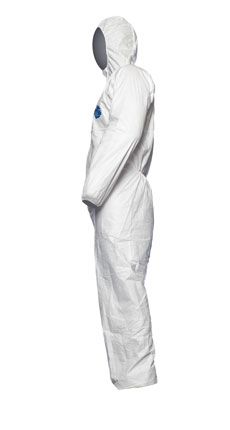
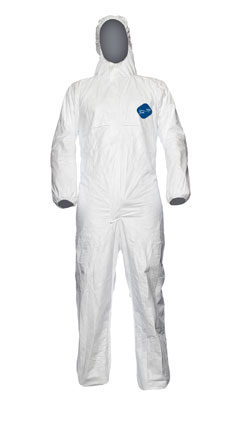
DuPont™ Tyvek® 500 Hooded Coverall. Category III, Type 5-B and 6-B white coverall that offers protection against infective agents (EN14126) and resistance to penetration by bloodborne pathogens, blood, and bodily fluids. Features serged external seams, elastic wrists, ankles, and face, a glued-in elastic waist, a storm flap, and a pin lock slider zipper pull. Suitable for pharmaceutical handling, chemical processing, and maintenance applications.


Hover over image to zoom
PRODUCT DETAILS
Full Part Number TY198SWHxx0025yy (xx=size;yy=option code)  Help
Fabric/Materials Tyvek®
Design Hooded coverall
Seam Serged (external)
Color White
Quantity/Box 25 per case
Sizes SM, MD, LG, XL, 2X, 3X, 4X, 5X, 6X, 7X
Option Codes LA

Features & Product Details

Tyvek® 500 garments are composed of flash spun high density polyethylene which creates a unique, nonwoven material available only from DuPont. Providing an ideal balance of protection, durability and comfort, Tyvek® 500 coveralls are designed to offer the performance of Type 5/6 garments, which have been tested to standards against light liquid aerosols and airborne solid particles. These coveralls provide an effective barrier against particles (down to 1.0 micron in size). Tyvek® 500 coveralls—model TY198S—are suitable for applications such as pharmaceutical handling, chemical processing, automatic spray painting, maintenance and many others.

  • Pin locking slider locks in place when the pins on the puller are pushed into the zipper elements
  • Protection against infective agents (EN 14126) including resistance to penetration by blood and body fluids using synthetic blood (ISO 16603 Class 3) and resistance to penetration by blood-borne pathogens using Phi-X174 bacteriophage (ISO 16604 Class 2)
  • EN 1073-2 (protection against radioactive contamination)
  • Antistatic treatment (EN 1149-5) - on both sides.
  • Serged external seams featuring patent-pending technology for enhanced liquid spray tightness
  • Chemical protective clothing, Category III, Type 5-B and 6-B.
  • Very low inward leakage due to optimized design
  • Tyvek® auto-lock zipper and storm flap for increased protection
  • Elastic face, wrists and ankles as well as glued-in waist elastic
  • Products made after January, 2023 are manufactured under specifications that do not contain natural rubber latex.

ADDITIONAL EQUIPMENT NEEDED

Fabric & Chemical Resistance Data

Physical Properties

Data relating to mechanical performance of the fabrics used in DuPont chemical protective clothing, listed for the selected garment according to the test methods and relevant European standard, if applicable. Such properties, including abrasion and flex-cracking resistance, tensile strength and puncture resistance can help in the assessment of protective performance.

Property Test Method Typical Result
Thickness DIN EN ISO 534 140 µm
Basis Weight DIN EN ISO 536 41.5 g/m2
Burst Strength - Mullen ISO 2758 345 kPa
Tear Resistance - Trap Tear (MD) EN ISO 9073-4 27 N
Tear Resistance - Trap Tear (CD) EN ISO 9073-4 20 N
Tensile Strength (MD) DIN EN ISO 13934-1 82 N
Tensile Strength (XD) DIN EN ISO 13934-1 68 N
Hydrostatic Head AATCC 127 48 inches H2O
Surface Resistivity (23°C / 25% RH) EN 1149-1 <2.5 x 10^9 ohms
Wearing Apparel Flammability 16 CFR 1610 Help Class 1

CHEMICAL RESISTANCE

SPECIAL WARNINGS

Frequently Asked Questions

Explore frequently asked questions to help you choose and use DuPont Personal Protection products with confidence.
How are Tyvek® garments different from other limited-use garments on the market?
Tyvek® garments are unique in several ways. First is the proprietary flash spun Tyvek® fabric which offers inherent breathable barrier that cannot easily be worn or abraded away. This inherent barrier of Tyvek® is not dependent on a thin film or a thin layer of small fibers -- with Tyvek®, every part of the fabric provides barrier. This delivers an effective breathable barrier to particles due to the torturous path created by this unique fabric structure. Unlike microporous film garments, the breathability of Tyvek® garments can be easily demonstrated. Watch this video to see for yourself.
Where can I find a SDS (Safety Data Sheet) for Tyvek® 500 garments?
Safety Data Sheets (SDS) are written in accordance with applicable federal regulations, 29 CFR 1910.1200, to communicate health and safety data on usage and handling of hazardous chemicals. Under this regulation, DuPont™ Tyvek®, ProShield®, and Tychem® materials and garments are defined as articles, not chemicals, and the SDS and labeling requirements in that standard do not apply.
Do Tyvek®500 garments meet ANSI/ISEA 101 sizing standards?
No. DuPont Tyvek® 500 coveralls do not meet ASNI/ISEA 101 sizing standards. For specific sizing dimensions on a particular DuPont garment, please view the Product Details tab for that garment.
Do Tyvek® 500 products contain latex?
As of January 2023, all DuPont Personal Protection products are manufactured under specifications that exclude components containing natural rubber latex. Tyvek® 500, Tyvek® 600 and Tyvek® 800 styles made before January 2023 contain natural rubber latex, which may cause allergic reactions in some sensitized individuals. Anyone who begins to exhibit an allergic response during the use of DuPont products should immediately cease using these products and should report it to DuPont at +1 (888) 439-2988 so that an investigation can be initiated.
Are Tyvek® 500 garments flame resistant or flame retardant (FR) ?
No, Tyvek® 500 garments are not flame resistant or flame retardant and should not be used around heat, flame, sparks or potentially flammable or explosive environments. Tyvek® 500 garments will ignite and continue to burn and melt.

In addition, Tyvek® 500 garments should not be worn under or over a garment made of Nomex® or any other flame resistant fabric, if the potential for fire or electric arc exists.
What determines if the garment is contaminated ?
The decision on whether or not a garment has been contaminated is made by local managers responsible for PPE based on an analysis of the incident in which the garment was used. This analysis may include exposure time, chemicals involved, level of exposure, proximity to the actual release, tasks performed and environmental monitoring in the area in which the garment was worn. Garments that are damaged, altered or show signs of contamination, such as discoloration, odor, stiffening or cracks, should not be used.
In what ways can I dispose of Tyvek® 500 garments?
In the United States, if not contaminated with chemical or biological hazards, Tyvek® 400 SFR garments can be recycled for non-hazardous applications through the Tyvek® Protective Apparel Recycling Program. Contact DuPont Personal Protection Customer Service at 1-800-931-3456 for information.

Tyvek® 400 SFR garments may be landfilled or incinerated in accordance with local regulations. Uncontaminated chemical protective garments may be incinerated in a facility that is capable of handling mixtures containing plastics. Likewise, an uncontaminated chemical protective garment may be buried in a facility that accepts plastic materials.

Contaminated garments that cannot be handled safely without protective equipment must be disposed of with other hazardous wastes, either through incineration or landfill per local regulations. Before discarding, cut off a sleeve or a leg so the garments cannot be worn again as protective clothing.
In what ways can I manage or prevent heat stress?
Chemical protective clothing can interfere with the natural regulation of body temperature. This can lead to a rise in core body temperature and heat stress. Implementing a conservative work/rest schedule or using a cooling system may be effective in reducing heat stress. (Note: Do not wear cooling vests in potentially flammable or explosive environments.) .)

Be aware of the symptoms and treatment of heat stress. If you or your co-workers have symptoms of heat stress such as nausea, dizziness, high heart rates, or excessive heat build-up, leave the work area immediately and remove the ensemble as quickly as possible after decontamination and seek professional care.

The maximum length of time the chemical protective clothing can be worn depends on variables such as the air supply, ambient conditions, climate inside the ensemble, physical and psychological conditions of the wearer, work rate and work load. The TLV® pocket guide from the American Conference of Governmental Industrial Hygienists (ACGIH, Cincinnati) provides corrected heat stress limits for some garments. Similar information is available on the federal OSHA web site (www.OSHA.gov). The WBGT correction factor for chemical protective garments is at least 10°C or higher for chemical garments made of impervious films (such as Tychem® garments) and covering the entire body (hooded coverall or encapsulating designs). For Tyvek® coveralls, the WBGT correction factor is 2°C with a hood and 1°C without a hood.
How should Tyvek® 500 garments be stored?
Store Tyvek® 500 garments in a cool, dark, dry location free of dirt and insects. Sunlight, ozone, high temperatures (>120° F ; 49° C), vehicle exhaust fumes, compression under heavy weights and sharp edges or projections are some conditions known to degrade the materials in these garments.

Store Tyvek® 500 garments in boxes, in bags or on hangers. Never step on protective garments. Never place or store heavy objects on top of protective garments.
Is it possible to wash and re-use Tyvek® 500 garments?
DuPont does not recommend washing Tyvek® 500 garments for re-use. These garments are designed for limited-use. They can be worn until damaged, altered or contaminated.
Do Tyvek® 500 products contain silicone?
All DuPont Personal Protection products are manufactured under specifications that do not contain silicone, with some exceptions. Tyvek® friction-coated shoe covers or Tyvek® garments with friction-coated shoe covers might contain silicone. This includes Tyvek® styles TY122, TY121, FC450 and FC454. Additionally, Tychem® 6000 AL styles TF630 and TF640T contain a silicone valve diaphragm. End users who are consuming these styles and who have concerns about silicone contamination should conduct their own testing to ensure they are suitable for their application(s).
Can Tyvek® 500 garments be recycled?
Yes; in the United States, Tyvek® 500 garments not contaminated with chemical or biological hazards can be recycled for non-hazardous applications through the Tyvek® Protective Apparel Recycling Program. Contact DuPont Personal Protection Customer Service at 1-800-931-3456 for information.
Are Tyvek® garments low linting?
Tyvek® fabric is low-linting by nature of its continuously strong, high-density polyethylene fibers. DuPont cannot guarantee the absence of particles on these garments as threads and zippers can be the most significant source of contamination. For end users with concerns about contamination or any other contaminants, the best practice is to audit in-bound materials, including garments, for those contaminants. End users with highly specialized requirements may consider Tyvek® IsoClean® garments for controlled environments designated as Clean-Processed (0C option): These garments are specially processed to minimize particle shedding and individually packaged in an ISO Class 4 cleanroom.
Are Tyvek® 500 garments anti-static or static dissipative ?
The fabric used to make Tyvek® 500 garments is treated with a topical antistatic agent to help minimize static build up and reduce nuisance garment cling.

In situations where static dissipation level is a critical performance property, end-users should evaluate the performance of their entire ensemble as worn including outer garments, inner garments, footwear and other PPE. In order for any garment system to be static dissipative, it must be able to drain a charge buildup through proper grounding devices, such as, but not limited to, workstation grounding clips or static-dissipative floors.

Under certain conditions, such as cold and dry weather, it is possible that garments might build and discharge static electricity. Discharges are not normally dangerous except in situations where the generation of an electrical spark could ignite a flammable atmosphere or startle the wearer. When operating around flammable chemicals, take steps to eliminate potential static discharges. In these situations, suggested steps include, but not limited to, water spray, the use of an overcover, raising humidity level of the work area, use of a commercial, anti-static application coating, grounding straps on equipment and personnel, inherently static-dissipating under- and over-garments, and testing of the worker's static dissipation before entry into the classified area.

However, in the case of explosive or flammable atmospheres, even if steps are taken to manage static formation and dissipate static charge, the risk of severe injury remains if an uncontrolled or accidental ignition occurs. Do not wear Tyvek® 500 chemical protective garments in potentially flammable or explosive atmospheres. Do not knowingly enter an environment in which the concentration of flammable gas is within flammable or explosive limits while wearing a Tyvek® 500 garment. If you determine that you are in a potentially flammable or explosive environment, retreat immediately.
Permeation The concentration of my hazard is LOWER than what is listed in the 'Search Hazards' box. What should I do?
If the temperature of your hazard is LOWER than the hazard listed in the hazard search box, go ahead and select the higher temperature hazard as long as the physical phase (solid, liquid or gas/vapor) is the same. Because chemical hazards become more aggressive with increasing temperatures, selecting a higher temperature chemical hazard will lead to a more conservative result.
Can Tyvek® 500 garments be worn in cleanroom applications?
Tyvek® 500 garments have not been designed for controlled environment applications. DuPont offers a full line of garments that have been specially manufactured, processed and packaged for use in controlled environment applications. Please see our complete line of controlled environment products at www.safespeccleanroom.dupont.com.
What are Type 4/5/6 garment standards?
Chemical protective clothing certified to a specific Type can have very different performance properties in terms of protection, durability and comfort. The indicated Type simply means that the suit has passed one or more of the whole suit liquid tests and meets the minimum performance requirements for the constituent mechanical and barrier tests. Click to View - Preparing for ISO 16602 PDF
What is the shelf life of Tyvek® garments?
DuPont suggests that Tyvek® garments be used within 5 years of receipt, provided they are properly stored and pass a full visual inspection. High temperature, oxidizing gases, wet, cold, ultraviolet and ionizing radiation can significantly impact the long-term life of garments made of Tyvek®. The antistatic properties may reduce over time. The user must ensure the dissipative performance is sufficient for the application.
How are Tyvek® 600 and Tyvek® 500 garments different from standard Tyvek® 400 garments?
Tyvek® 600 and Tyvek® 500 garments use a special type of Tyvek® fabric which has different physical properties and improved chemical resistance properties when compared to fabric used in standard Tyvek® 400 garments. Additionally, the seams used in standard Tyvek® 400 garments are different than the seams for Tyvek® 600 and Tyvek® 500 garments. Tyvek® 600 garments offer seams that are sewn and then taped and Tyvek® 500 garments offer external sewn seams, where the seam thread is visible on the outside of the garment. Both of these seam designs, when coupled with the enhanced fabric, offer improved overall garment system protection levels. These fabric and seam differences along with other enhanced garment design elements represent the key differences between Tyvek® 600 and Tyvek® 500 garments versus standard Tyvek® 400 garments. Because of these enhancements, Tyvek® 600 and Tyvek® 500 garments are also CE certified. Tyvek® 600 is CE certified to Types 4, 5 & 6. Tyvek® 500 is CE certified to Types 5 & 6.
Permeation The concentration of my hazard is HIGHER than what is listed in the 'Search Hazards' box. What should I do?
If the concentration of your hazard is HIGHER than the hazard concentration listed in the hazard search box, you can NOT use the data for the lower concentration hazard. This data will not give you an accurate assessment of suitable garments. Please Contact Us for assistance.